

Energy Tariffs
⚡🔥 Energy Price Cap
What is the Energy Price Cap?
If you’re on a standard tariff, you’ll be paying a unit rate set by the Energy Price Cap. The Energy Price Cap rates are the maximum amount you’ll pay per unit of gas or electricity. The Price Cap rose by 13% on average from 1st July 2026.
The price you pay is dependent on how you pay and the area of the UK you live in.
For more information, see Money Saving Expert.
What are the current unit rates and standing charges?
The following rates are the capped Energy Price Cap unit rates for payment by direct debit for households in the South West from 1 July to 30 September 2026:
Electricity Unit rate: 26.39p per kWh / Standing charge: 57.89p per day
Gas Unit rate: 7.48p per kWh / Standing charge: 28.68p per day
From 1 July 2026, a typical dual-fuel household paying by direct debit will pay £1,686/year, which means average bills have risen by 13%.
Should I stick with my current tariff or switch to another?
According to forecasts, rates under the Energy Price Cap may rise later in the year. It’s important to consider if you will make any significant savings in switching before the next Energy Price Cap rate changes.
- Check your current supplier's fixed energy deals. See how the fixed rate compares with the current Energy Price Cap rate.
- If you can find a fixed rate that’s 10% or so less than the July Price Cap*, then it may be worth considering switching if you value price certainty or if you’re thinking of switching due to customer service issues.
- Check with your current supplier if there are any exit fees to pay if you end your contract early.
- If you are at all uncertain, contact your energy supplier to discuss your options.
*information correct as of 1 July 2026
You can keep updated of the latest advice from Money Saving Expert.
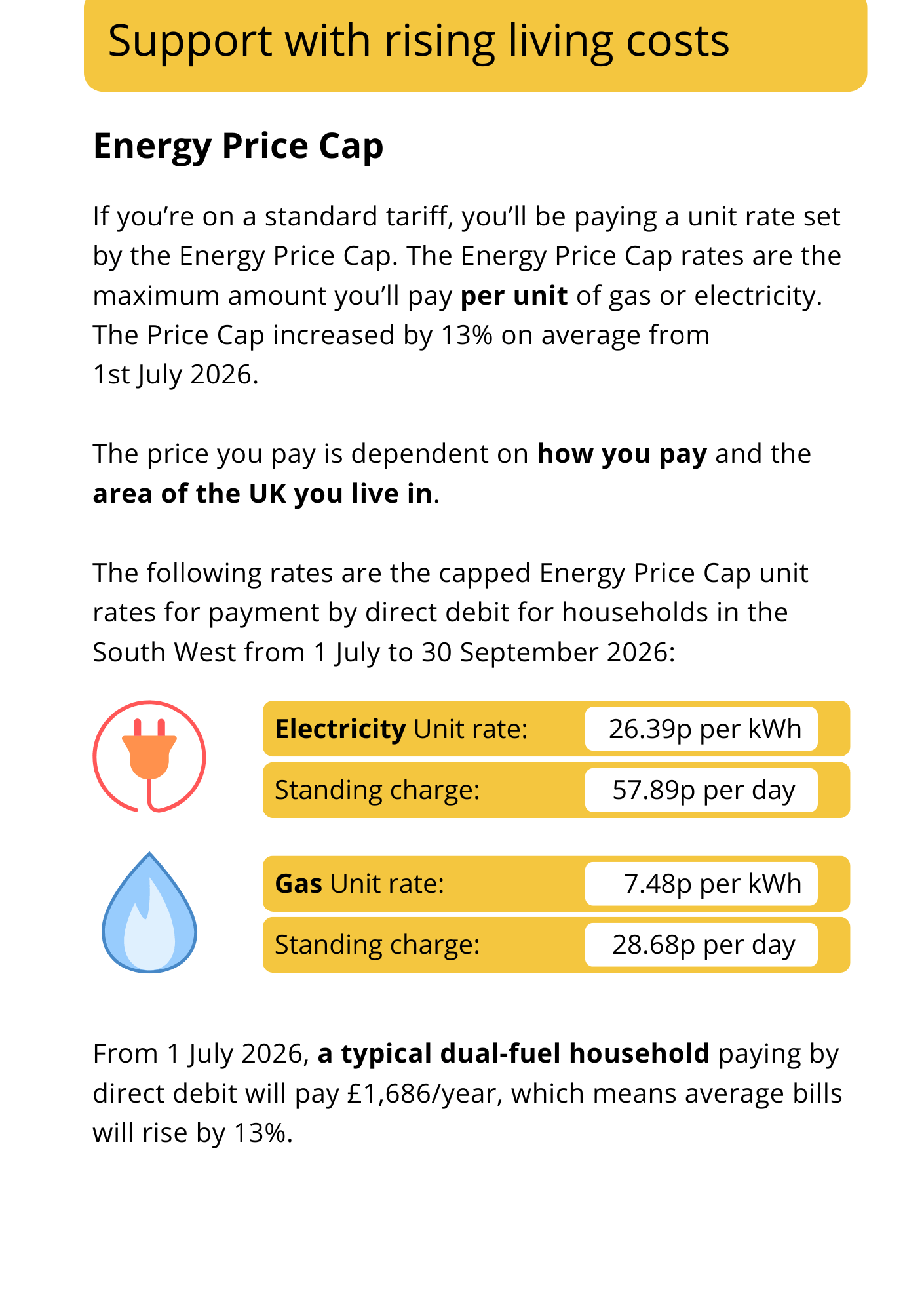
Energy Price Cap information
Energy Price Cap information and unit rates for payment by direct debit for households in the South West from 1 July to 30 September 2026.
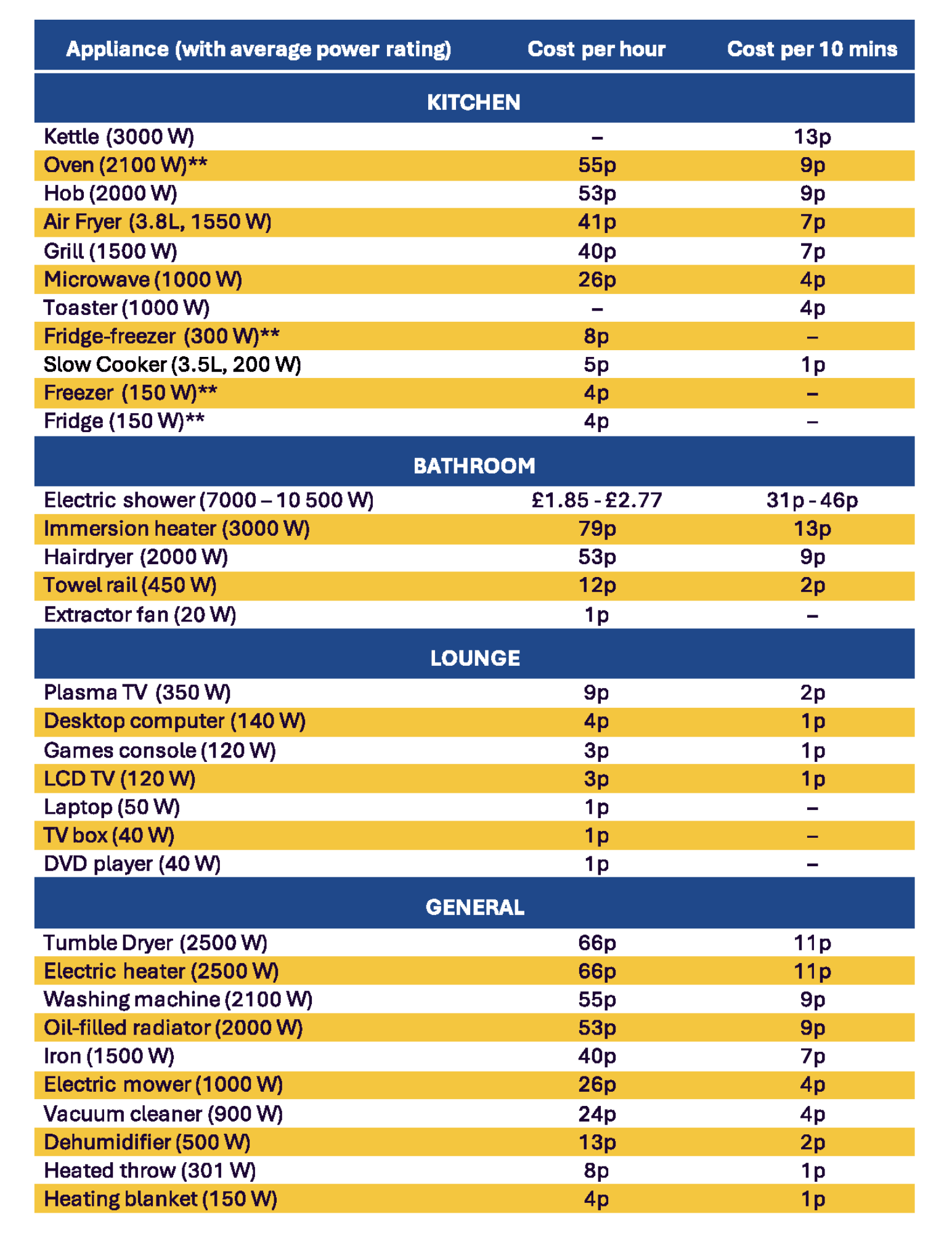
How much electricity are you really using?
Want to know how the energy price cap affects your energy bills? Take a look at our information to see how much electricity common household appliances use. This can be a great way to find ways to save energy, reduce your energy usage and lower your electricity bills throughout the year.