Smart meters
🏠 Smart meters
What is a Smart Meter?
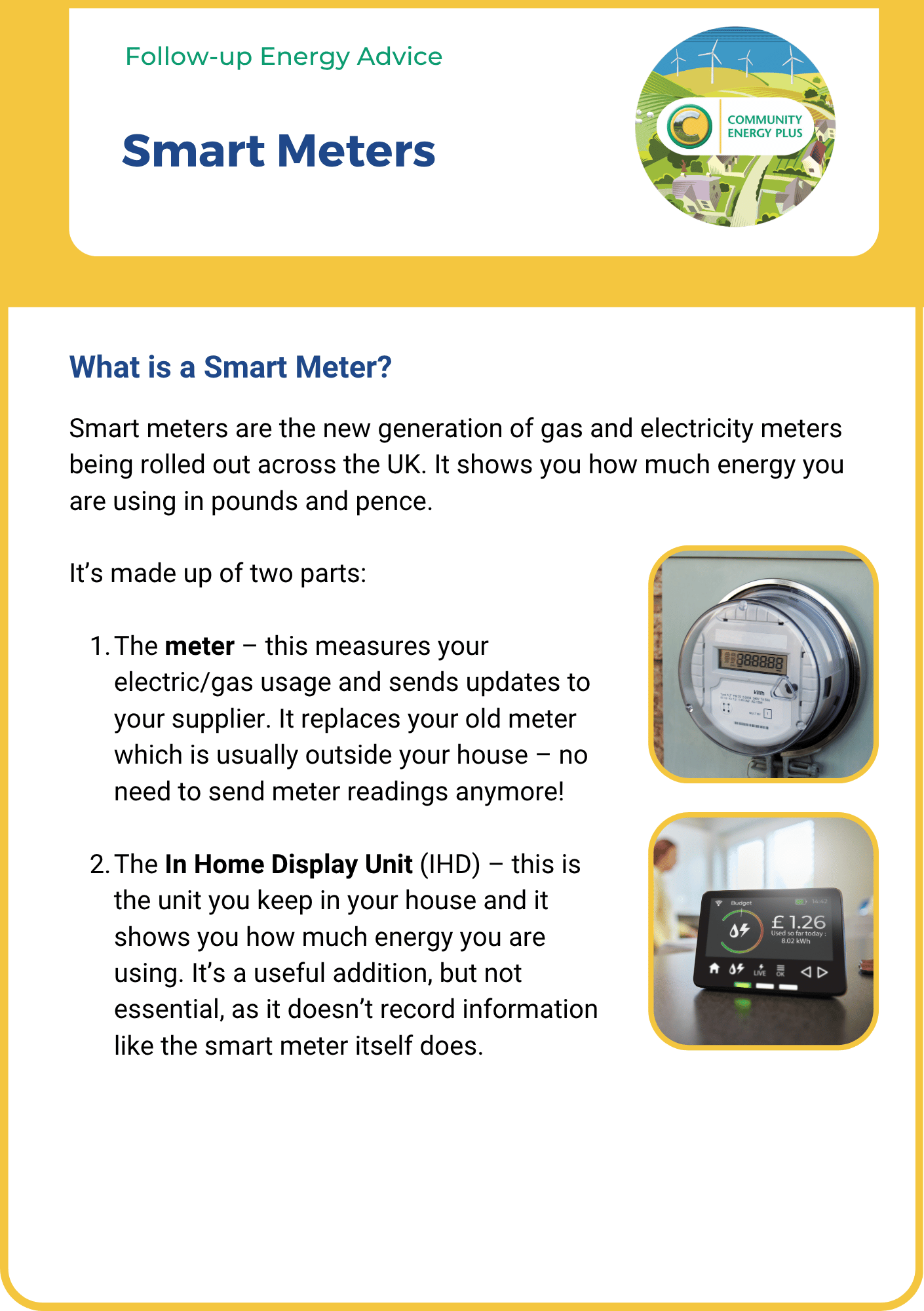
Smart meters are the new generation of gas and electricity meters being rolled out across the UK. It shows you how much energy you are using in pounds and pence.
It’s made up of two parts:
- The meter – this measures your electric/gas usage and sends updates to your supplier. It replaces your old meter which is usually outside your house – no need to send meter readings anymore!
- The In Home Display Unit (IHD) – this is the unit you keep in your house and it shows you how much energy you are using. It’s a useful addition, but not essential, as it doesn’t record information like the smart meter itself does.
Is it free?
There is no additional cost for the installation of your smart meter and IHD. The maintenance costs (same as a traditional meter) will be spread across everyone’s bills. You won’t have an extra charge on your bill because you chose to have a smart meter.
When it’s installed, you should be offered an IHD for no additional cost - this shows your spending to you in near-real time.
What are the benefits?
- Accurate bills. No need to send meter readings anymore! You’ll get accurate bills based on smart meter readings, rather than estimated bills.
- Easy top ups. If you have a top-up ‘pay as you go’ meter, you can top up from home using your energy supplier’s app, website or by phone – great if it’s raining, you can’t get out to top-up, the shop is closed, or you lose your card. Some suppliers give the option of setting automatic top-ups to make the process of topping-up even easier. If you prefer topping-up in person at a shop or post office, you can still do this using the new card provided.
- Money saving tariffs. You get access to smart tariffs and special demand-shifting incentives that provide cheaper energy at certain times, like when there’s a lot of electricity being generated by renewables or there’s less demand on the energy grid. You can take advantage of these flexible reward schemes and tariffs by using delayed-start timers on appliances or shifting domestic tasks (laundry, oven use) to off-peak hours, avoiding the peak electricity demand period of 4pm - 8pm.
- Better control. Seeing your usage in real time can help you reduce waste and manage your budget. It can also help you to identify when something has been left on or you’re using energy-hungry appliances - you can tweak your behaviour and see the impact of your changes shown on the display.
Smart meters operate in both prepay and credit mode. This means if you want to swap from pay as-you-go to monthly or quarterly bills, you can do this without needing to change the meter.
How the In Home Display unit (IHD) works
The In-Home Display unit receives data from the meter and so lets you see how much you’re spending (in pounds and pence) and how much energy you’re using in kilowatts.
It will tell you this information for the day, week, month or year. Some energy suppliers can also show you this data in an app.
There are many models of IHDs - suppliers often have two or three different versions. Energy suppliers should provide user guides on their website.
Installation
A trained engineer will visit to fit the meter within a pre-agreed appointment slot which normally takes around an hour. Your power or gas may be turned off for a short time while the meter is replaced. The installer will perform safety checks and show you how everything works before they leave.
If you really don’t want a smart meter, you don’t have to accept one. However, some suppliers offer energy tariffs that include compulsory smart meter installation - so by choosing to accept one, you can expand your choice of tariffs.
Common myths
- The smart meter is expensive to run. Running costs of the meter go to the Data Network Operator. This cost is charged to everyone in the country and divided equally – just as traditional meters are too. An In-Home Display costs less than a pound a year to run and will help you to save money by identifying energy-hungry appliances and adjusting your behaviour to cut your bills. It’s your choice whether to use the IHD or not. Your first smart meter bill may appear higher than usual if your bill was based on estimated readings, but you can enjoy peace of mind that you will have a better understanding of your energy costs in the future.
- Smart meters spy on people. Smart meters only record overall energy usage per half hour and share these readings with your energy supplier through a secure network. They do not store personal information such as your name, address and bank details. If you have concerns about this, visit smartenergygb.org/en/faqs. You can also ask to see your energy supplier’s privacy policy which explains how it handles data it collects.
- Smart meters emit harmful radiation. Extensive research, including studies by the UK Health Security Agency (UKHSA), indicates that exposure from smart meters is well below internationally agreed safety guidelines. Exposure from smart meters is generally lower than that from mobile phones, toasters or Wi-Fi routers.
- You can’t get a smart meter if you rent. If you pay the energy bills and the meter belongs to your energy supplier, then yes, you have the right to request a smart meter, although you should discuss this with your landlord first.
- You can’t switch energy supplier if you have a smart meter. Yes, you can. Older smart meters had issues sending automatic readings when a customer switched energy suppliers. This problem has been resolved with updates to the software of old meters, and it isn’t an issue with the new generation of smart meters currently being installed.
Smart meter isn’t working?
If your In-Home Display stops working, first check that it is charged and plugged in. You can also try resetting it.
If it still isn’t working, contact your energy supplier. They can help you troubleshoot, check if your smart meter is still sending them readings, send you a replacement IHD or arrange for an engineer to get your smart meter working again. Once you’ve contacted your supplier they must tell you how they will provide a solution, within 5 working days. If they don’t, they should give you £40 compensation.
If this doesn’t work, here are some alternative options:
- The smart meter can be connected through the building’s Wi-Fi.
- Request a booster aerial signal (this is an extra aerial fitted to the meter’s communication hub).
- If there are other people in your area in a similar situation, if you all make complaints to your energy suppliers, this highlights to the energy regulator OFGEM that improved signal is needed in your area - and they may install another tower.
- Check Citizen’s Advice website for troubleshooting information: Your energy supply - Citizens Advice
- Contact your MP - especially if you are a vulnerable household.
- Contact us if you need further support: 0800 954 1956
Environmental benefits 🌱
Smart meters provide information to help predict how much electricity the country needs and when/where it is needed. Time-of-use tariffs and energy flexibility schemes encourage householders to change their pattern of energy use so it’s spread more evenly throughout the day. By reducing demand for energy at peak times, we can make more use of home-grown renewable energy and reduce our use of fossil fuels and imported energy.